
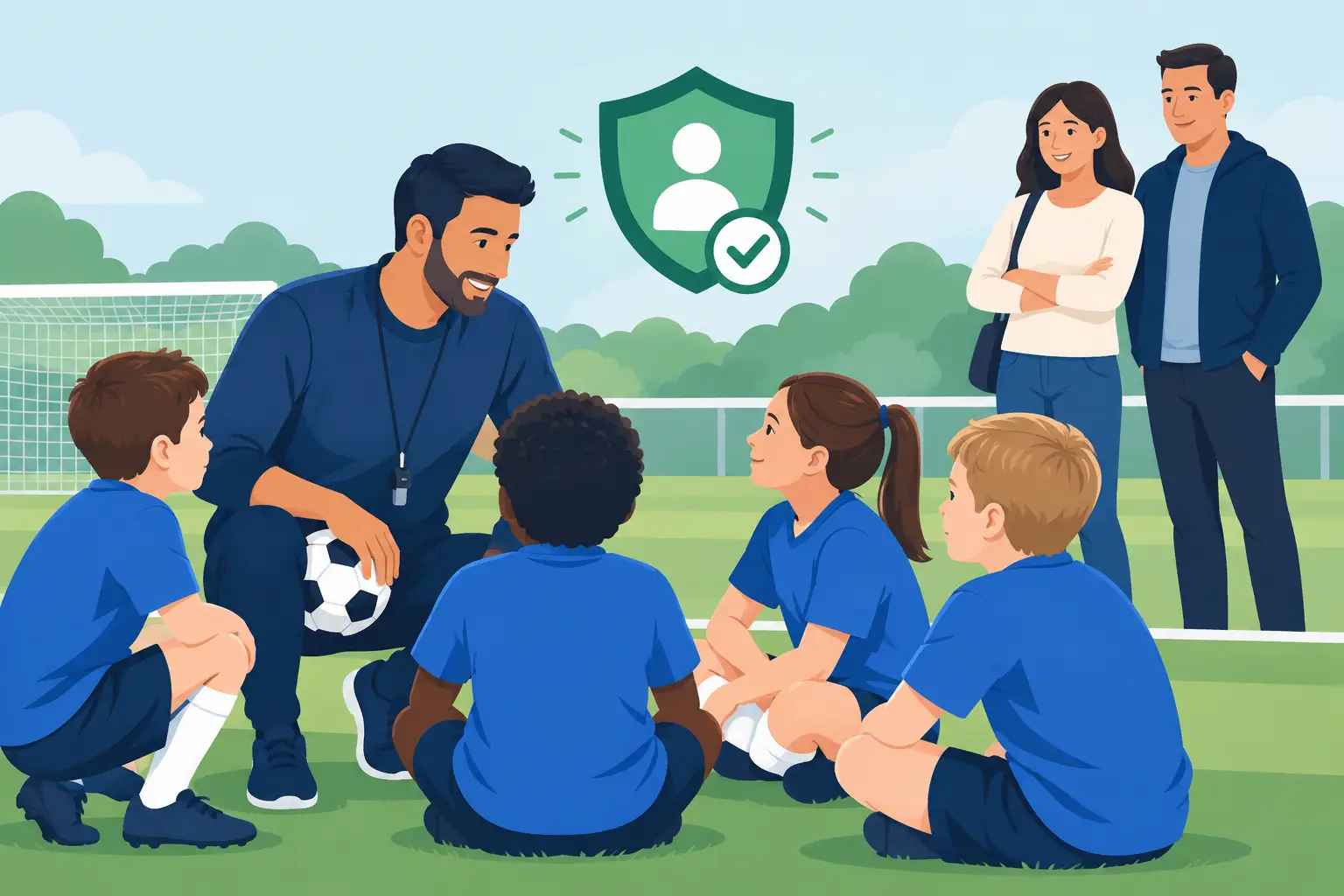
A first football class can feel like a big step, especially when your child is still finding their feet in new groups. You want them to run, kick, laugh and make friends – while knowing the adults leading the session take their responsibility seriously. DBS checked football coaches give parents an essential layer of reassurance, helping create a safe, positive space where young children can enjoy their first experience of sport.
For children aged 18 months to 6 years, football is about far more than scoring goals. It is a chance to practise listening, take turns, try something unfamiliar and feel proud of a new skill. The right coach understands that every child arrives with a different personality, confidence level and pace of development.
What does DBS checked mean?
DBS stands for Disclosure and Barring Service. A DBS check is part of the safer recruitment process for people working with children in England and Wales. It helps an organisation make informed decisions about whether someone is suitable to work in a role that involves children.
The type of check needed depends on the role and its duties. Where a coaching role is eligible, an enhanced DBS check may provide more detailed information than a basic check. Some roles working closely with children may also be checked against the relevant barred list. These checks are handled within clear legal rules, so a responsible provider will use the appropriate process for the job rather than treating DBS as a simple box-ticking exercise.
A DBS certificate is not a guarantee that nothing can ever go wrong. No single check can be. Safeguarding works best when DBS checks sit alongside good recruitment, training, clear policies, proper supervision and a culture where concerns are listened to and acted on. Still, asking whether a children’s coach is DBS checked is a sensible and important starting point.
Why DBS checked football coaches matter in early years
Young children need adults who are calm, kind and attentive. At an early-years football class, a coach may be helping a shy child join a circle, encouraging them after a missed kick, or supporting them as they learn to share a ball. Parents need to feel confident that this care is being delivered by someone appointed thoughtfully and responsibly.
DBS checked football coaches are part of that trust. They show that a provider recognises the particular duty involved in working with children and has safeguarding at the heart of its service. This matters whether your child is outgoing and ready to charge onto the pitch or needs a few sessions to watch, warm up and join in.
It can also make the practical side of family life easier. When you find a local class with clear safeguards, you can focus on what you hoped the activity would bring: a happy hour in the week, a growing sense of independence and perhaps the first familiar faces your child is excited to see again.
Safety supports confidence – for children and parents
Children often borrow confidence from the adults around them. When coaches are friendly, consistent and prepared, children are more likely to try a new game or have another go after something feels tricky. A reassuring environment does not mean wrapping children in cotton wool. It means giving them the support to take small, age-appropriate risks, such as speaking up in a group, kicking with their less familiar foot or joining a partner activity.
Parents benefit too. Leaving the sidelines is not always necessary in a class for younger children, and many sessions welcome parental involvement where appropriate. But even when you are nearby, it is comforting to know there are clear standards behind the smiles and high fives.
DBS is one part of good safeguarding
A football provider should be able to explain how it keeps children safe without making the answer complicated. DBS checks matter, but parents should look for the wider picture as well.
A well-run early-years class has coaches who understand how young children learn. Instructions should be short, playful and easy to follow. Activities should be organised for the group’s age and ability, with plenty of chances to move rather than long periods of waiting. Coaches should know how to respond sensitively if a child is upset, reluctant to participate or struggling to settle.
Safeguarding also includes sensible session arrangements. Consider whether there is a clear sign-in process, suitable adult supervision, first-aid provision and a straightforward way to raise a question or concern. Good providers will communicate clearly with parents about who is coaching, what to bring and what happens if a class needs to change.
You are not being difficult by asking these questions. A professional children’s activity provider should welcome them. Trust grows when families receive clear answers, not vague assurances.
Questions worth asking before a trial class
Before booking, it is reasonable to ask whether coaches are DBS checked and how often the provider reviews its safeguarding arrangements. You may also want to ask who will lead the class, whether coaches have relevant qualifications or training, and how the team supports children who are nervous or new to group activities.
The answers should feel practical and parent-friendly. For example, a provider might explain how they introduce the coach at the start of class, keep activities adapted for toddlers and pre-schoolers, or help a child participate at their own pace. There is a difference between a class that is merely safe on paper and one where children genuinely feel seen and included.
It is equally useful to observe the atmosphere during a trial. Are children encouraged rather than shouted at? Does the coach notice the quieter child as well as the energetic one? Is there room for giggles, wobbles and second attempts? At this age, a coach’s warmth is not an extra. It is central to the experience.
Football should feel like a happy first team
Some families worry that football will become too competitive too soon. For early-years children, the best first classes focus on enjoyment and development, not selection or pressure to perform. A goal can be brilliant, but so can waiting for a turn, following a simple instruction, balancing on one foot or inviting another child into a game.
That approach can help children build coordination, listening skills and social confidence while becoming comfortable in a group setting. It also gives them time to develop a positive relationship with being active. A child who leaves saying, “Can we come back next week?” has achieved something meaningful.
At Star Kicks, qualified, DBS-checked coaches lead play-led sessions designed to help little ones enjoy football from the very beginning. The focus is on friendly encouragement, visible progress and the simple magic of turning team mates into best mates.
A safe choice can still be a fun one
Parents should not have to choose between professional standards and a class that feels joyful. The strongest early-years football sessions bring both together: careful safeguarding behind the scenes and colourful, energetic play out on the pitch.
If you are considering a class, start with the basics. Check that coaches are DBS checked, ask how the provider supports children and see whether the environment feels right for your family. Then give your child the space to explore. With the right adults around them, their first kick of a football can become the start of new confidence, new friendships and a weekly routine they cannot wait to join.